Super PiggyBac 转座酶系统BioVector® Super PiggyBac Transposase System
- 价 格:¥49950
- 货 号:BioVector® Super PiggyBac
- 产 地:北京
- BioVector NTCC典型培养物保藏中心
- 联系人:Dr.Xu, Biovector NTCC Inc.
电话:400-800-2947 工作微信:1843439339 (QQ同号)
邮件:Biovector@163.com
手机:18901268599
地址:北京
- 已注册
BioVector® Super PiggyBac 转座酶系统说明书
BioVector® Super PiggyBac Transposase System Manual
第一部分 中文说明
一 产品基本信息与系统背景
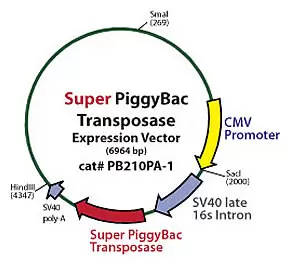
产品名称:BioVector® Super PiggyBac Transposase (含表达质粒与纯化重组蛋白系统)
系统类型:非病毒介导的哺乳动物基因组高效整合转座酶系统(Non-viral Transposon System)。
起源与工程化改良:
天然起源:PiggyBac (PB) 转座子系统最初自粉纹夜蛾(Trichoplusia ni)细胞中分离获得。它属于 DNA 转座子(Class II Transposon),通过经典的“剪切与粘贴(Cut-and-Paste)”机制发生转座。
Super 改良:Super PiggyBac (sPBase) 是通过对天然 PiggyBac 转座酶进行大规模饱和氨基酸位点突变与理性设计而获得的超强进化版本。与天然型 PB 转座酶相比,sPBase 的基因组整合效率提升了数倍至数十倍,即使面对超大分子量(超过 10 kb 到 100 kb)的基因外源片段,依然能保持强劲的染色体整合能力。
生物安全级别:1级(BSL-1)。作为完全非病毒源性的核酸底物,不产生任何具有复制能力的病毒颗粒,因而无需复杂的 BSL-2 等级防护,是现代基因工程中极安全的基因递送工具。
二 转座分子机制与靶向特征
Super PiggyBac 转座酶专门识别并作用于转座子载体两端的反向末端重复序列(Inverted Terminal Repeats, ITRs)。其核心分子运作图谱如下:
[转座子载体] ---> 5'-ITR ====== 目的基因 (GOI) ====== ITR-3' │ (被 sPBase 剪切) ▼[宿主基因组] ---> 5'-nnnnnn TTAA mmmmmm-3' (特异性插入 TTAA 位点)精准剪切与粘贴(Cut-and-Paste Mechanism):sPBase 蛋白特异性结合转座子供体质粒两侧的 5' ITR 和 3' ITR,形成立体的转座复合物,随后将整段目的基因盒(Expression Cassette)从质粒骨架上无损完整剪切下来。
TTAA 位点特异性(TTAA-Specificity):释放出的转座子片段被 sPBase 运送至宿主细胞核内,专门识别并整合到宿主染色体上带有 5'-TTAA-3' 碱基序列的位点中。整合后,转座子两端将各形成一个重复的 TTAA 序列。
无痕切除活性(Seamless Excision):这是 PiggyBac 系统独一无二的绝对优势。在后续需要时(如干细胞重编程中清除因子),重新引入转座酶可以激活“反向转座”,将整合在基因组中的片段从小鼠/人类染色体中原样切除并完全修复受体位点,不在基因组中留下任何外源突变、碱基缺失或疤痕(No scar/mutation left behind)。
三 实验操作、细胞转染与稳株筛选标准步骤
转染体系配置比例(Co-transfection Setup):
该系统属于典型的双质粒系统(Helper-Donor System):
Donor 质粒(转座子载体):带有 5'/3' ITR 以及由特定启动子驱动的目的基因(GOI)和筛选标记(如 Puro/Neo)。
Helper 质粒(表达载体):即本品 Super PiggyBac Transposase 表达质粒。
推荐质量质量比:在转染时,Donor 质粒与 Helper 质粒的推荐质量比为 2:1 至 5:1(即转座子载体占绝对多数,避免过量转座酶引发的“过生产抑制”现象,过多的转座酶反而会降低整合效率)。
细胞转染与整合(Cell Transfection):
常规贴壁细胞(如 HeLa、293T、CHO):当细胞融合度达到 60%-70% 时,使用常规脂质体转染试剂(如 Lipofectamine 3000)将混合质粒共转染入细胞。
难转染细胞/悬浮细胞(如免疫 T 细胞、干细胞、电转敏感株):强烈建议使用核转染(Nucleofection/电穿孔)方案。将细胞悬浮于专用电转液中,加入按比例混合的质粒后执行特定电击程序。
抗生素加压筛选稳定株(Stable Line Selection):
转染后 24-48 小时,细胞进入正常的转录翻译期。此时可取部分细胞在荧光显微镜下观测 Donor 载体上的荧光报告物以评估初始转染效率。
转染 48 小时后,更换为含有相应抗生素(如 Puromycin, G418 或 Blasticidin)的新鲜完全培养基。
持续维持抗生素选择压力 7 到 14 天(每 2-3 天更换一次新鲜选择培养基)。由于未整合的 Donor 质粒会随着细胞分裂自发稀释丢失,只有将 ITR 片段成功整合至染色体 TTAA 位点上的细胞才能存活并无限传代,从而高效建立基因表达极其稳定的克隆。
四 核心科研应用方向
超大分子量基因片段/多基因复合物的染色体稳定整合:传统的慢病毒载体对插入片段大小有严格限制(通常上限为 8-9 kb,超过后病毒滴度会发生断崖式下跌)。Super PiggyBac 系统对于 10 kb 至 100 kb 以上的超长 DNA 片段(如多亚基蛋白复合物、全长基因组位点、多级代谢通路)仍能保持极高的整合效率,是构建复杂基因工程菌/细胞株的首选。
非病毒源性 CAR-T/CAR-NK 免疫细胞治疗系构建:在现代细胞免疫治疗研究中,使用 Super PiggyBac 系统代替价格昂贵且质控复杂的慢病毒/逆转录病毒进行 CAR(嵌合抗原受体)基因的递送。利用电穿孔将 sPBase 与 CAR-Donor 导入原代 T 细胞中,不仅能获得极高的稳定表达率,还能显著降低病毒源引发的插入突变致癌风险,大幅度节约临床前研发成本。
iPSC 诱导多能干细胞的无痕重编程与定向分化(Seamless iPSC Generation):利用 sPBase 介导含有 Sox2, Oct4, Klf4, c-Myc 等重编程因子的转座子整合入体细胞染色体,在诱导成功获得多能干细胞(iPSC)后,再次瞬时转入 sPBase 激活无痕切除活性,将基因组中的重编程重组框精准剥离,获得真正健康、不带有任何外源载体残留和遗传疤痕的临床级干细胞株。
工业级高产重组蛋白/单克隆抗体工程细胞株(如 CHO 细胞)的快速快速建立:在生物制药工业中,利用 Super PiggyBac 的多拷贝高效率整合特性,将治疗性单抗的轻重链基因盒转导入 CHO 细胞中。通过高浓度抗生素加压,能极快筛选出染色体活跃转录区发生多位点单向串联整合的高产工程克隆,大幅缩短细胞株开发(CLD)周期。
PART 2 ENGLISH SECTION
I General Information and System Background
Product Name: BioVector® Super PiggyBac Transposase (Available as expression plasmids or purified recombinant functional protein systems)
System Type: Non-viral-mediated, high-efficiency mammalian genomic integration transposon framework.
Origin and Evolutionary Engineering:
Natural Origin: The foundational PiggyBac (PB) transposon system was originally characterized from the cabbage looper moth (Trichoplusia ni). It represents a classic Class II DNA Transposon utilizing a coordinated "cut-and-paste" transposition mechanism.
Super Engineering: Super PiggyBac (sPBase) is a heavily evolved variant created via hyper-mutational screening and rational structural design of the native transposase enzyme. Compared to wild-type PB enzyme configurations, sPBase delivers manifold multi-fold increases in functional genomic integration efficiencies. It maintains strong chromosomal inserting kinetics even when managing massive cargo sizes (spanning 10 kb to over 100 kb).
Biosafety Level: BSL-1. Operating as a completely non-viral nucleotide framework, it is incapable of generating replication-competent viral entities. It requires no specialized BSL-2 physical clearance parameters, acting as a highly secure tool in advanced genetic engineering.
II Molecular Mechanisms and Targeting Architecture
The Super PiggyBac Transposase specifically recognizes and binds to the Inverted Terminal Repeats (ITRs) flanking the payload expression cassette on a donor transposon vector. The step-by-step molecular pathway operates as follows:
Precise Cut-and-Paste Kinetics: The sPBase protein binds the 5' ITR and 3' ITR domains on the circular donor plasmid, folding the sequence into an active synaptic complex. It executes complete, clean double-stranded cleavage to excise the transposition cassette seamlessly away from the plasmid backbone.
TTAA Site Tropism: The excised cargo complex is directed into the host nucleus by the transposase machinery, which specifically searches for and integrates the passenger DNA into chromosomal regions harboring the tetranucleotide motif 5'-TTAA-3'. This insertion duplicates the TTAA target site at both integration junctions.
Seamless Scarless Excision: This feature represents a signature capability unique to the PiggyBac paradigm. Upon re-introducing the sPBase enzyme into an established line in the absence of a donor vector, the enzyme triggers reverse transposition. It excises the embedded cassette out of the host chromosome, restoring the original TTAA anchor site without leaving behind any genetic modifications, nucleotide deletions, or mutational scars (no scar/mutation left behind).
III Transfection Formulations, Cell Handling, and Stable Strain Enrichment
Co-transfection Stoichiometry (Helper-Donor Ratios):
The architecture deploys a traditional Helper-Donor Vector Framework:
Donor Vector (Transposon): Carries the 5'/3' ITR elements encapsulating the Gene of Interest (GOI) along with a mammalian selection marker (e.g., Puro, Neo, Blast).
Helper Vector (Transposase): The expression plasmid carrying the Super PiggyBac Transposase (sPBase) gene.
Recommended Mass Ratio: Investigators should balance the Donor to Helper mass ratio between 2:1 and 5:1 during transfection mix configuration. Excess helper plasmid can trigger "overproduction inhibition," where crowded transposase molecules block the ITR sites, reducing integration performance.
Cell Transformation and Transfection:
Adherent Monolayers (e.g., HeLa, 293T, CHO): At 60%-70% surface confluence, deliver the balanced plasmid formulation using standard liposomal transfection reagents (such as Lipofectamine 3000).
Hard-to-Transfect/Suspension Populations (e.g., primary human T-cells, hESCs, iPSCs): Nucleofection or traditional electroporation is highly recommended. Suspend target cells in designated electroporation buffers, incorporate the plasmid blend, and execute cell-specific pulse programs.
Antibiotic Selection and Stable Line Isolation:
At 24-48 hours post-transfection, the transformed populations enter log-phase expression. Evaluate starting transfection efficiencies under a fluorescence microscope to track reporter channels embedded in the donor construct.
At 48 hours post-delivery, change the culture broth to fresh media carrying selection antibiotics (e.g., Puromycin, G418, or Blasticidin) at pre-determined empirical working levels.
Maintain selection pressure for 7 to 14 days, refreshing the selective media every 2-3 days. Transient un-integrated donor circles will dilute out and degrade across cell division cycles. Only those cellular fractions that successfully anchor the ITR cassette into transcriptionally active chromosomal TTAA loci will survive and expand, quickly generating highly robust stable clonal lineages.
IV Strategic Research Applications
Stable Chromosomal Anchoring of Massive Payloads and Multi-Gene Cassettes: Conventional lentiviral delivery vectors suffer from strict package constraints (cargo beyond 8-9 kb triggers sharp drops in viral packaging efficiency and functional titers). The Super PiggyBac platform easily accommodates massive payloads ranging from 10 kb to over 100 kb (e.g., multi-subunit protein complexes, whole locus genomic sequences, multi-step metabolic pathways), serving as a premier non-viral vehicle for large-scale engineering.
Non-Viral CAR-T and CAR-NK Immunotherapy Cell Manufacturing: In cell therapy development pipelines, Super PiggyBac serves as an effective alternative to high-cost viral engineering protocols. Utilizing electroporation to introduce sPBase alongside a CAR-Donor construct into primary human lymphocytes yields high integration rates while minimizing insertional oncogenesis risks linked with viral vectors.
Scarless Reprogramming and Differentiation of Induced Pluripotent Stem Cells (iPSCs): Enables sPBase-mediated delivery of pluripotency factors (Sox2, Oct4, Klf4, c-Myc) into somatic cell lines. Once pluripotency is established, a second transient delivery of sPBase excises the integration cassette cleanly away, leaving behind clean, clinical-grade iPSC lines free of vector fragments or structural modifications.
Accelerated Cell Line Development (CLD) for Industrial Biologics Production (e.g., CHO Factories): In bioprocess manufacturing pipelines, Super PiggyBac leverages its multi-copy integration capability to transfer monoclonal antibody heavy- and light-chain cassettes into production-grade CHO cells. High-stringency antibiotic screening rapidly enriches for highly productive, stable clones that have anchored the transgene into hyper-active transcription hubs.
BioVector NTCC质粒载体菌株细胞蛋白抗体基因保藏中心
电话:400-800-2947
工作QQ/微信同号:1843439339
网址
- 公告/新闻