lpB-CMV-MCS-EF1a-GFP-Puro 重组慢病毒/转座子表达质粒载体 BioVector® Recombinant Lentiviral/Transposon Expression Plasmid Vector
- 价 格:¥59980
- 货 号:BioVector® lpB-CMV-MCS-EF1a-GFP-Puro
- 产 地:北京
- BioVector NTCC典型培养物保藏中心
- 联系人:Dr.Xu, Biovector NTCC Inc.
电话:400-800-2947 工作微信:1843439339 (QQ同号)
邮件:Biovector@163.com
手机:18901268599
地址:北京
- 已注册
BioVector® lpB-CMV-MCS-EF1a-GFP-Puro 重组慢病毒/转座子表达质粒载体
BioVector® lpB-CMV-MCS-EF1a-GFP-Puro Recombinant Lentiviral/Transposon Expression Plasmid Vector
第一部分 中文说明
一 产品基本信息与遗传学背景
载体名称:BioVector® lpB-CMV-MCS-EF1a-GFP-Puro
产品类型:哺乳动物双启动子高效重组慢病毒(Lentiviral)/转座子(Transposon)双功能表达质粒载体。
复制子与骨架基础:
大肠杆菌复制子:pUC origin(高拷贝复制子,用于在大肠杆菌中的质粒高效扩增与分子克隆)。
病毒/转座子骨架:基于改良型第三代HIV慢病毒载体或特定非病毒转座子集成系统构建,两端携带关键的顺式作用元件,用以介导目的片段精准整合至宿主细胞基因组中。
双标记选择系统(Dual Reporter & Selection Markers):
荧光报告标记:绿色荧光蛋白 GFP(Green Fluorescent Protein)。可用于转化/转染后通过荧光显微镜或流式细胞仪(FACS)实时、定量地监测细胞的转导效率。
哺乳动物筛选抗性:嘌呤霉素抗性基因 Puro(Puromycin resistance, pac)。用于在转染/感染后加入嘌呤霉素,快速杀死未成功整合的阴性细胞,筛选建立高纯度的稳定细胞株(Stable cell line)。
分子大小:约 8.5 kb 到 9.5 kb(依骨架细节变动)。
生物安全级别:1级(BSL-1)。注:当该质粒与慢病毒包装辅助质粒(如 pMD2.G 和 psPAX2)混合共转染 293T 细胞制备活体慢病毒颗粒时,生成的病毒液操作级别必须提升至 2 级(BSL-2)。
二 核心功能元件与双启动子转录调控图谱
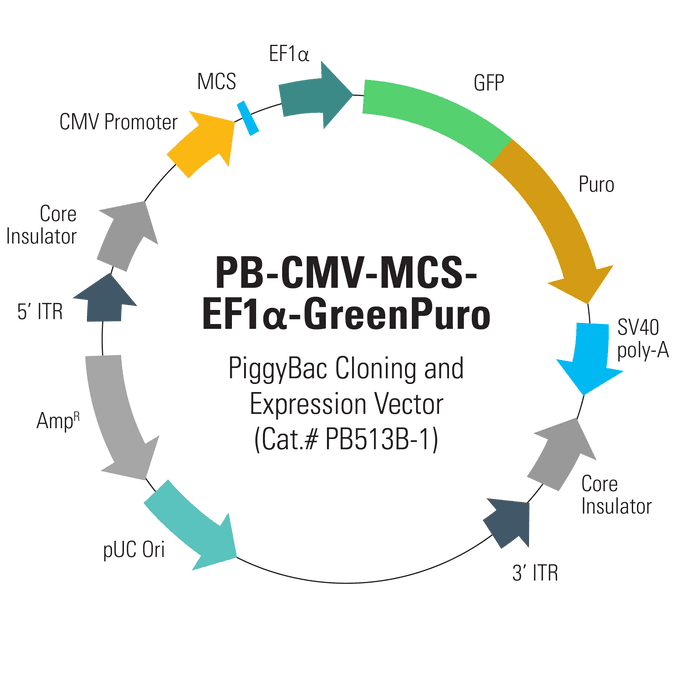
lpB-CMV-MCS-EF1a-GFP-Puro 载体采用先进的独立双启动子(Dual-Promoter Architecture)级联设计。这种结构能够有效避免多顺反子系统(如 IRES 或 2A 肽)中后位基因翻译效率低下或切除不完全的问题。其核心功能元件排列如下:
CMV 启动子驱动核心转录轴(第一转录单元):
CMV 启动子(CMV Promoter):源自人类巨细胞病毒的极强、广谱型组成性启动子,在绝大多数常见的哺乳动物细胞系(如 HeLa, 293T, CHO 等)和原代细胞中具备极高的转录活性。
多克隆位点(MCS):紧跟在 CMV 启动子下方,提供丰富的限制性内切酶单一切点,用于高效克隆和插入实验人员的目的基因(Gene of Interest, GOI)。
EF1a 启动子驱动标记物轴(第二转录单元):
EF1a 启动子(EF1a Promoter):人类延伸因子 1 alpha 启动子。这是一个在哺乳动物体内高度稳定、不易受表观遗传学修饰干扰而发生基因沉默(Gene silencing)的强启动子。即使在 CMV 启动子容易发生沉默的干细胞(如 iPSC、ES 细胞)或免疫细胞(如 T 细胞)中,EF1a 依然能维持强劲、持久的驱动效能。
GFP-Puro 融合或级联表达:由 EF1a 启动子协同驱动 GFP 荧光标记与 Puromycin 抗性标记的联合表达,确保只要绿色荧光亮起或在嘌呤霉素压力下存活的细胞,其内部的第二转录单元均在处于活跃工作状态。
基因组整合与终止元件(Integration & Termination):
载体两侧包含 5' WRE/LTR 及 3' Delta-LTR(或相应的转座子左右端反向重复序列 ITR),以及 WPRE(土拨鼠肝炎病毒 post-transcriptional 调控元件),用以大幅增强 mRNA 在细胞质内的稳定性和重组蛋白的翻译丰度。
三 质粒扩增、转染、慢病毒包装与稳株筛选标准操作步骤
大肠杆菌中的质粒扩增(Plasmid Propagation):
推荐宿主:由于慢病毒/转座子骨架两端含有高度重复的长末端重复序列(LTR/ITR),在常规大肠杆菌中极易发生自发性同源重组导致骨架塌陷。强烈强制使用 Stbl3、SURE 或 Epi300 等抗重组的特殊大肠杆菌感受态菌株。严禁使用普通 DH5alpha 或 TOP10 进行大规模扩增。
筛选培养基:标准 LB 固体/液体培养基,加入 100 µg/ml 的氨苄青霉素(Ampicillin)。
培养参数:建议在 30 摄氏度下低速振荡(200 rpm)孵育 16 到 24 小时。低温扩增能够大幅度降低两端重复序列发生突变或重组脱落的几率。
慢病毒包装制备(Lentiviral Packaging Protocol,若作为慢病毒使用):
转染准备:使用高纯度无内毒素的质粒中提试剂盒提取质粒。将本表达质粒与第二代或第三代慢病毒包装混合质粒按比例混合,使用转染试剂(如 Lipofectamine 3000 或 PEI)共转染至处于对数生长期的 293T 细胞中。
病毒收集:转染后 48 小时及 72 小时分别收集细胞上清液。通过低速离心(3000 rpm,10分钟)及 0.45 µm 聚醚砜(PES)低蛋白结合滤器过滤以去除细胞碎片。所得滤液即为包含 lpB-CMV-MCS-EF1a-GFP-Puro 整合盒的活体慢病毒液,可直接用于转导或通过超速离心进行浓缩后存于 -80 摄氏度。
宿主细胞转导与嘌呤霉素稳株筛选(Stable Cell Line Generation):
病毒转导:将目标宿主细胞接种于培养皿中。当细胞融合度达到 50% 左右时,加入适量慢病毒液,并可加入 6-8 µg/ml 的聚布雷线(Polybrene)以增强病毒吸附转导效率。
荧光观测:转导 24 至 48 小时后,在荧光显微镜下观察绿色荧光(GFP),评估初始感染效率。
加压筛选:转导 48 小时后,吸除含病毒旧基,加入含有适当浓度嘌呤霉素(Puromycin,工作浓度通常需提前通过死时间曲线 Kill Curve 测定,一般细胞系为 1 µg/ml 至 5 µg/ml)的新鲜完全培养基。每 2 到 3 天更换一次含有 Puro 的选择性培养基。持续筛选 7 到 10 天,直至阴性对照孔细胞完全死亡,而实验孔中的存活细胞全部发出强烈的绿色荧光,即成功建立稳定表达目的基因的单克隆或多克隆细胞株。
四 核心科研应用方向
顽固或难转染细胞系中的外源基因稳定超表达:本载体作为慢病毒/转座子双功功能系,能够极高效率地感染常规脂质体极难转染的细胞(如悬浮淋巴细胞、原代内皮细胞、原代神经元及各类干细胞)。通过将外源目的基因(GOI)整合至宿主基因组中,实现基因的永久性、高丰度、不随传代而丢失的稳定超表达。
双标记系统用于实时细胞示踪与体内成像研究(Cell Tracking):利用内源集成的强荧光 GFP 标记,重组构建的稳定细胞株可直接用于共聚焦显微镜下的动态形态学观察、流式细胞术定量分析,或者将细胞注射入免疫缺陷小鼠体内建立异种移植瘤模型(Xenograft),通过活体荧光成像系统(IVIS)实时追踪肿瘤的体内生长、迁移与骨转移规律。
大规模功能基因筛选、RNAi 及突变体库构建的反应骨架:由于该载体带有 MCS 和强力的 CMV 启动子,可用于批量克隆各种不同的致癌基因、抑癌基因突变体或特定非编码 RNA(如 lncRNA)。通过慢病毒大规模感染靶细胞并结合 Puromycin 快速筛选,能够极高通量地构建高一致性的细胞表型筛选平台,用以评估小分子靶向药物的敏感性及耐药基因筛查。
PART 2 ENGLISH SECTION
I General Information and Genetic Background
Vector Name: BioVector® lpB-CMV-MCS-EF1a-GFP-Puro
Product Type: Dual-functional recombinant mammalian lentiviral/transposon expression plasmid vector.
Replicon & Structural Backbone:
Prokaryotic Replicon: pUC origin (High-copy framework engineered for high-yield propagation and restriction cloning inside standard bacterial selection systems).
Viral/Transposon Architecture: Constructed based on an optimized third-generation HIV-1 lentiviral vector matrix or integrated non-viral transposon cassette systems. It carries essential cis-acting elements flanking the core to coordinate precise chromosomal integration into the host genome.
Dual Reporter & Selection Marker Framework:
Fluorescent Reporter: Green Fluorescent Protein (GFP). Permits rapid, real-time visual tracking of transduction efficiencies via standard fluorescence microscopy or Quantitative Flow Cytometry (FACS).
Mammalian Selection Marker: Puromycin resistance gene (Puro, pac). Enables rapid clearing of un-integrated negative cellular fractions post-transduction, establishing high-purity stable lineages.
Molecular Size: Approximately 8.5 kb to 9.5 kb (subject to custom modifications of the core cloned parameters).
Biosafety Level: BSL-1. Note: When this specific transfer plasmid is combined with companion packaging vectors (e.g., pMD2.G and psPAX2) via co-transfection into 293T factories to manufacture functional lentiviral particles, the operational bio-risk rating scales up to Biosafety Level 2 (BSL-2).
II Core Structural Elements and Dual-Promoter Transcriptional Map
The lpB-CMV-MCS-EF1a-GFP-Puro vector implements an advanced dual-promoter级联 topology. This architecture effectively circumvents the translational attenuation and incomplete proteolytic cleavage profiles frequently associated with polycistronic designs such as IRES or 2A-peptide linkers. The sequential configuration of its elements is outlined below:
CMV Promoter-Driven Primary Transcription Unit:
CMV Promoter: A strong, broad-spectrum constitutive promoter derived from human cytomegalovirus, demonstrating extreme transcriptional velocities across nearly all mainstream mammalian immortalized cell lines (e.g., HeLa, 293T, CHO) and primary somatic isolates.
Multiple Cloning Site (MCS): Positioned directly downstream of the CMV promoter, hosting an array of unique restriction endonuclease slots to streamline the precise cloning of the Gene of Interest (GOI).
EF1a Promoter-Driven Marker Selection Unit:
EF1a Promoter: Human elongation factor 1 alpha promoter. Known for its strong constitutive resilience against epigenetic silencing mechanisms. It maintains sustained, robust transcription inside demanding environments like human embryonic stem cells (hESCs), induced pluripotent stem cells (iPSCs), and primary T-lymphocytes where viral promoters like CMV often undergo methylation and inactivation.
GFP-Puro Fusion Expression: Coordinates the simultaneous translation of the fluorescent reporter and selection marker under a single transcript, ensuring that any cell displaying green fluorescence or surviving puromycin pressure is actively running the selection cassette.
Genomic Integration and Processing Elements:
Flanked by 5' WRE/LTR and 3' Delta-LTR segments (or respective transposon Left/Right Inverted Terminal Repeats - ITRs) alongside a Woodchuck Hepatitis Virus Posttranscriptional Regulatory Element (WPRE) to heavily augment mRNA stability and target protein expression levels.
III Plasmid Propagation, Lentiviral Packaging, and Stable Line Selection
Bacterial Plasmid Propagation:
Mandatory Host Strains: Due to the presence of highly repetitive LTR/ITR palindromic architectures flanking the transfer core, this plasmid is structurally prone to spontaneous homologous recombination resulting in backbone deletions inside standard cloning bacteria. Investigators must exclusively deploy recombination-deficient strains such as Stbl3, SURE, or Epi300 competent cells. Standard DH5alpha or TOP10 variants are strictly contraindicated.
Selection Agar/Broth: Standard Luria-Bertani (LB) media supplemented with 100 µg/ml Ampicillin.
Incubation Parameters: Highly recommended to culture cultures at 30 degrees Celsius under low-speed agitation (200 rpm) for 16 to 24 hours. Lowered incubation thermal inputs drastically suppress recombination rates and stabilize the repeat components.
Lentiviral Particle Generation and Harvesting (If deployed as a viral delivery tool):
Transfection Formulation: Extract high-purity, endotoxin-free plasmid stocks. Co-transfect the lpB transfer plasmid together with 2nd or 3rd generation packaging plasmid systems into active, log-phase 293T cells using liposomal transfection reagents (e.g., Lipofectamine 3000 or polyethylenimine - PEI).
Harvest Routine: Harvest the media supernatants at 48 hours and 72 hours post-transfection. Pellet out detached cellular components via low-speed centrifugation (3000 rpm for 10 minutes) and pass the fluid through a 0.45 µm low protein-binding Polyethersulfone (PES) filter. The cleared viral filtrate can be deployed immediately for target infection or concentrated via ultracentrifugation and locked down at -80 degrees Celsius.
Target Transduction and Puromycin Selection Tracking:
Viral Transduction: Seed out target mammalian cells. At approximately 50% surface confluence, introduce calculated volumes of the harvested lentiviral supernatant, optionally supplemented with 6-8 µg/ml Polybrene to maximize membrane attachment.
Fluorescence Analysis: Evaluate active GFP expression profiles under an inverted fluorescence microscope 24 to 48 hours post-infection to compute baseline transduction efficiency.
Selection Pressure Execution: At 48 hours post-transduction, replace media with fresh growth broth supplemented with appropriate working concentrations of Puromycin (derived empirically via a pre-determined Kill Curve, typically spanning 1 µg/ml to 5 µg/ml for standard cell lines). Refresh selection media every 2 to 3 days. Continue the selection pressure for 7 to 10 days until all non-transduced cells in the negative control vessel are fully cleared and 100% of the surviving experimental mass shows uniform GFP tracking.
IV Strategic Research Applications
Sustained Ectopic Overexpression inside Refractory and Primary Cell Types: This vector acts as a highly effective system for driving permanent overexpression inside difficult-to-transfect cell populations (e.g., suspension lymphocytes, primary endothelial networks, primary cortical neurons, and varied stem cell niches). By permanently embedding the GOI cassette into the host chromosomal framework, it bypasses transient dilution effects.
Dual-Marker Tracing for Live-Cell Confocal and In Vivo Tumor Imaging: Utilizing the built-in highly active GFP reporter, engineered stable cell lines can be deployed directly in live-cell confocal tracking assays, flow cytometry characterizations, or injected into immunodeficient mice (e.g., BALB/c Nude or NSG) to generate xenograft models. Tumor propagation, systemic metastasis, and tissue tropism can then be mapped using In Vivo Imaging Systems (IVIS).
High-Throughput Functional Screenings, Mutant Library Generation, and RNAi Overexpression Blprints: The dual-promoter template with an expansive MCS serves as an ideal vector platform to construct multiplexed mutant validation screens, evaluate panel sets of oncogene/tumor-suppressor variants, or overexpress structural non-coding RNAs (lncRNAs). Following high-efficiency viral library delivery and rapid puromycin-mediated enrichment, investigators can systematically profile candidate lines against small-molecule targeted inhibitor compounds or map therapeutic resistance loops.
BioVector NTCC质粒载体菌株细胞蛋白抗体基因保藏中心
电话:400-800-2947
工作QQ/微信同号:1843439339
网址http://www.biovector.net
- 公告/新闻