H37rv 结核分枝杆菌标准毒株 BioVector® Mycobacterium tuberculosis Strain H37rv Standard Reference Line
- 价 格:¥599860
- 货 号:BioVector® H37rv
- 产 地:北京
- BioVector NTCC典型培养物保藏中心
- 联系人:Dr.Xu, Biovector NTCC Inc.
电话:400-800-2947 工作微信:1843439339 (QQ同号)
邮件:Biovector@163.com
手机:18901268599
地址:北京
- 已注册
BioVector® 结核分枝杆菌 H37rv 标准毒株
BioVector® Mycobacterium tuberculosis Strain H37rv Standard Reference Line
第一部分 中文说明
一 产品基本信息与遗传学背景
菌株名称:BioVector® Mycobacterium tuberculosis strain H37rv
常用别名:H37rv、M.tb H37rv
物种来源:结核分枝杆菌 (Mycobacterium tuberculosis)
临床背景与历史:H37rv 毒株于 1905 年首次从一名患有慢性肺结核的患者体内分离获得。经过长期的体外传代与筛选,该菌株因具有稳定且完全保留的对人毒力(Fully virulent)特征,被国际医学界及世界卫生组织广泛采纳为结核病研究中最经典、应用最广泛的国际通用标准参考毒株。
基因组与分子特征:
首个完成全基因组测序的结核菌株:其全基因组由约 441 万个碱基对(4.41 Mb)组成,GC 含量高达约 65.6%。基因组中包含约 4000 个复杂的蛋白质编码基因,其中很大比例专门用于编码脂质代谢相关的酶,这直接构成了其致密、富含分枝菌酸(Mycolic acid)的细胞壁结构。
完整的毒力岛与调控轴:基因组内完整保留了介导对宿主巨噬细胞入侵、胞内寄生及免疫逃逸的核心毒力区(如 RD1 区及 ESX-1 分泌系统)。
生物安全级别:3级(BSL-3)。由于该菌株属于对人类具有强致病性的高危空气传播病原体,所有涉及活菌的冻存管复苏、扩增、离心、分装及动物接种等实验操作,必须严格在具备国家认证资质的生物安全三级(BSL-3/P3)实验室的负压生物安全柜内进行,并强制执行双人双签核制度。
二 形态学、生长动力学与培养环境
形态学特征:
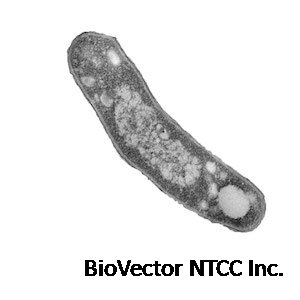
微观形态:经抗酸染色(Acid-fast staining/齐尔-尼尔森染色)后,在显微镜下展现为特异性的红染、纤细、略微弯曲的杆菌,通常呈现出由索状因子(Cord factor)介导的平行排列或特征性“索状结构”(Cord-like growth formations)。
宏观菌落形态:在固体培养基(如罗氏培养基)上生长数周后,形成典型的干燥、粗糙、微黄或呈乳白色、表面如菜花状(Vrucous/Cauliflower-like)的特征性菌落。
生长模式:在含有吐温-80(Tween-80)等非离子表面活性剂的液体培养基中呈均一分散悬浮生长;在不含去污剂的培养基中则高度倾向于在液面自发聚集成致密的菌膜(Pellicle)。
群体增殖动力学:属于典型的极慢速生长菌,其群体对数增长倍增时间大约为 18 至 24 小时。
标准完全培养基配方:
固体培养基(L-J 罗氏培养基):基于新鲜全蛋液、马铃薯粉、甘油及孔雀绿等成分混合灭菌而成的经典凝固斜面。
液体培养基(7H9 / 7H11 基础系列):
BioVector® Middlebrook 7H9 液体基础成分。
维持添加:10% 优质 ADC 或 OADC 生长增强添加剂(含牛血清白蛋白、右旋糖、过氧化氢酶及油酸)。
防聚集添加:0.05% 至 0.1% 吐温-80(Tween-80)或泰洛沙泊(Tyloxapol),用以打散索状聚集物,确保光度法测定菌密度的准确性。
0.2% 甘油(Glycerol)。
物理培养参数:37摄氏度恒温恒湿、避光静置培养。因其为专性需氧菌,液体扩增时需保持足够的瓶内顶空体积(建议液量不超过瓶容积的 20%)。
三 菌株常规传代与冻存标准操作步骤
固体到液体扩增转种操作(Subculturing Protocol):
菌苔收集:在 BSL-3 负压柜内,使用无菌接种环轻轻刮取 L-J 斜面上生长旺盛的干燥 H37rv 菌苔(尽量避免刮入底层培养基)。
机械打散与洗涤:将菌苔置于含有无菌生理盐水或 7H9 基础液的小离心管中,加入无菌玻璃微珠,在涡旋振荡器上剧烈震荡 1 到 2 分钟,以物理研磨方式切断索状因子,使菌块充分打散成单菌悬液。静置 10 分钟让大颗粒沉降。
接种参数:吸取上层均匀的单菌悬液,按 1比10 到 1比20 的稀释比例接种入含有 OADC 和 吐温-80 的 7H9 液体培养基中。初始起始浊度控制在波长 600 nm 下光密度值(OD600)为 0.05 至 0.1 之间。通常需要静置或低速摇床(100 rpm)孵育 2 到 3 周 才能进入对数生长旺盛期(OD600 达到 0.6 至 1.0)。
菌种冻存保藏:
当液体培养物达到对数中期(OD600 约 0.5-0.8)时,直接加入甘油作为低温保护剂,使其最终工作浓度达到 15% 至 20%。
彻底混匀后,分装入耐高压耐低温的螺口冻存管中。将其放入梯度降温盒中进行程序降温,随后移入 负80摄氏度超低温冰箱或液氮罐 vapor phase 中长期锁定保藏。
四 核心科研应用方向
抗结核新药与高通量小分子抗生素体外筛选(Drug Screening):BioVector® H37rv 作为国际公认的标准敏感株,广泛用作阳性对照和靶向底物。通过测定最低抑菌浓度(MIC)和最低杀菌浓度(MBC),来评估全新机制的小分子候选药物(如针对 MmpL3、AtpE 等核心靶点)以及中草药提取物的体外杀菌效能。
耐药机制演变与交叉耐药屏障评估:常通过将 H37rv 长期暴露于递增浓度的抗结核药物(如异烟肼、利福平、乙胺丁醇等)环境中,进行体外人工定向耐药株演变实验。以此模拟临床多耐药(MDR)或广泛耐药(XDR)突变株的产生,进而通过全基因组重测序锁定新的耐药基因位点。
新型结核疫苗、佐剂及免疫原性评价模型(Vaccine Evaluation):作为经典强毒攻击株(Challenge strain)。通过对实验动物(如 C57BL/6 小鼠、豚鼠)接种各种新型候选疫苗(如亚单位疫苗、重组 BCG、DNA 疫苗等)后,在 BSL-3 设施内使用 H37rv 进行气溶胶或尾静脉强毒攻击。通过检测动物肺、脾脏内的荷菌量(CFU 计数)和组织病理学变化,来权威量化评估疫苗的体内免疫保护效力。
结核分枝杆菌宿主-病原体交互机制(Host-Pathogen Interactions)解析:在体外细胞模型中,常用 H37rv 感染人类原代巨噬细胞、THP-1 分化细胞或非小细胞肺癌细胞(如 A549),用以研究结核菌如何阻止吞噬体与溶酶体融合、抑制宿主细胞凋亡、诱导坏死以及启动肉芽肿(Granuloma)早期核心形成的精细分子网络。
PART 2 ENGLISH SECTION
I General Information and Genetic Background
Strain Name: BioVector® Mycobacterium tuberculosis strain H37rv
Synonyms: H37rv, M.tb H37rv
Species Origin: Mycobacterium tuberculosis
Clinical History & Origin: Isolated in 1905 from a human patient presenting with chronic pulmonary tuberculosis. Following long-term systematic in vitro passaging configurations, this line was globally adopted as the definitive standard virulent reference strain by academic consortia and the World Health Organization due to its stable, fully intact, reproducible virulence replication kinetics.
Genome & Molecular Features:
Pioneering Reference Sequenced Strain: Possesses a circular genome of approximately 4.41 million base pairs (4.41 Mb) with a remarkably high GC content averaging 65.6%. It hosts around 4000 distinct protein-coding sequences, dedicating a high metabolic percentage to lipid synthesis enzymes that construct its dense, mycolic acid-rich hydrophobic cell envelope.
Preserved Virulence Architecture: Intact containment of crucial pathogenicity clusters, including the Region of Difference 1 (RD1) and the specialized ESX-1 (Type VII) secretion machine required for subverting host intracellular defenses.
Biosafety Level: Biosafety Level 3 (BSL-3). As a high-risk airborne human pathogen capable of causing severe respiratory and systemic disease, all manipulation stages involving viable bacteria—including vial thawing, active propagation, harvesting, and mock challenges—must strictly take place inside certified BSL-3 isolation facilities utilizing negative-pressure biosafety enclosures under dual-operator authentication.
II Morphological Attributes, Kinetic Profiles, and Cultivation Media
Morphology:
Microscopic View: Exhibits strong red staining under classical acid-fast coloration matrices (e.g., Ziehl-Neelsen stain). Cells appear under oil immersion as slender, slightly curved rods organized in characteristic parallel lines or serpentine "cord-like growth formations" directed by the surface lipid cord factor.
Macroscopic Colonial Traits: Produces dry, rough, off-white to cream-colored colonies presenting a classical verrucous or cauliflower-like topography on solid media slants after multi-week incubation steps.
Growth Mode: Spreads as a homogenous suspension configuration inside fluid broths supplemented with non-ionic detergents; readily constructs dense, tough floating surface pellicles on un-supplemented fluid layers.
Population Doubling Kinetics: Categorized as an obligate slow-growing bacterium. Its typical logarithmic doubling phase spans an average sequence of 18 to 24 hours.
Standard Complete Medium Specifications:
Solid Matrix (Löwenstein-Jensen / L-J Slants): Coagulated egg-based medium formulations incorporated with potato flour, glycerol, and malachite green.
Liquid Matrix (Middlebrook 7H9 / 7H11 Series):
BioVector® Middlebrook 7H9 liquid basal backbone broth.
Routine Supplements: 10% premium ADC or OADC enrichment supplement cocktail (bovine serum albumin, dextrose, catalase, and oleic acid).
Anti-Clumping Additives: 0.05% to 0.1% Tween-80 or Tyloxapol to structurally break up serpentine cords, establishing precise optical density tracking.
0.2% Glycerol enrichment.
Physical Incubation Parameters: Regulated strictly at 37 degrees Celsius under standard humidified conditions in the dark. Being an obligate aerobe, fluid vessels require substantial top-space volumes (fluid configurations should not exceed 20% of the overall bottle displacement).
III Routine Passaging and Cryopreservation Protocols
Solid Slant to Fluid Broth Subculturing Routine:
Biomass Harvesting: Inside a BSL-3 biosafety cabinet, carefully scrape active, young dry colonies from the L-J slant face using a sterile inoculation loop, avoiding core agar fragments.
Mechanical Homogenization: Deposit the harvested biomass into a sterile vial carrying 7H9 base media alongside sterile glass micro-beads. Vortex dynamically for 1 to 2 minutes to physically break up cell clumps and resolve the serpentine cord architectures into a uniform suspension. Allow larger residues to settle for 10 minutes.
Inoculation Seeding: Siphon off the homogenous top fluid and introduce it into fresh OADC-Tween-80 supplemented 7H9 liquid parameters at split ratios ranging from 1:10 to 1:20. Balance the starting optical density to an OD600 metric between 0.05 and 0.1. Incubate statically or under low-speed orbital agitation (100 rpm) for 2 to 3 weeks to safely reach peak mid-logarithmic density (OD600 around 0.6-1.0).
Cryovial Stock Preservation:
Once the expanding fluid culture achieves optimal mid-logarithmic parameters (OD600 spanning 0.5-0.8), incorporate sterile glycerol directly as a cryoprotectant to settle at a final configuration of 15% to 20% total volume.
Mix thoroughly, distribute into high-pressure leak-proof internal thread cryovials, and place inside standard temperature-gradient freeze boxes. Lower the temperature progressively to -80 degrees Celsius before moving stocks into liquid nitrogen vapor phase repositories for long-term secure lock-down.
IV Strategic Research Applications
High-Throughput Anti-Tubercular Drug Discovery and Antibiotic Profiling: BioVector® H37rv serves as the definitive global drug-susceptible standard benchmark. It is deployed to run automated high-throughput assays evaluating candidate chemical arrays and natural botanicals, indexing precise Minimum Inhibitory Concentration (MIC) and Minimum Bactericidal Concentration (MBC) data.
Directed In Vitro Resistant Evolution Mapping: Routinely exposed to incremental selective pressures of frontline compounds (such as Isoniazid, Rifampicin, or Ethambutol) to evolve multi-drug resistant (MDR) variants in vitro. Whole-genome re-sequencing of the derived lines tracks novel single-nucleotide polymorphisms mapping drug-target escape routes.
In Vivo Efficacy Testing of Candidate Vaccines and Novel Adjuvants: Serves as the premier virulent choice for challenge assays. Following immunization regimens with candidate vaccines (e.g., recombinant BCG, subunits, or DNA platforms) on model species (C57BL/6 mice, guinea pigs), subjects are exposed to H37rv virulent aerogenic aerosol challenges within BSL-3 facilities. Colony Forming Unit (CFU) counts from lung and spleen homogenized extracts index protective performance.
Dissecting Host-Pathogen Interaction Topologies: Used in cell culture assays to infect primary human alveolar macrophages, differentiated THP-1 lineages, or lung epithelial lines (A549). These screens elucidate how virulent Mycobacterium tuberculosis disrupts phagosome-lysosome fusion architectures, down-regulates apoptotic executioners, and initializes the basic transcriptomic pathways of early-stage granuloma synthesis.

BioVector NTCC质粒载体菌株细胞蛋白抗体基因保藏中心
电话:400-800-2947
工作QQ/微信同号:1843439339
网址http://www.biovector.net
- 公告/新闻