HUES8 NTCC™人类胚胎干细胞(hESC)系human embryonic stem cell (hESC) line-BioVector NTCC Inc.
- 价 格:¥499860
- 货 号:NTCC™HUES8
- 产 地:北京
- BioVector NTCC典型培养物保藏中心
- 联系人:Dr.Xu, Biovector NTCC Inc.
电话:400-800-2947 工作微信:1843439339 (QQ同号)
邮件:Biovector@163.com
手机:18901268599
地址:北京
- 已注册
The NTCC™ HUES8 cell line is a well-known and extensively characterized human embryonic stem cell (hESC) line. It is part of a series of hESC lines (HUES1-9) derived and made available by Harvard University.
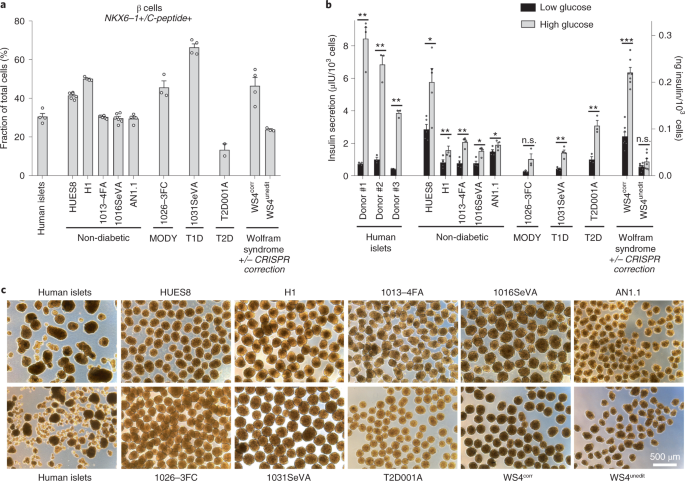
Key Characteristics
Origin: HUES8 cells were derived from the inner cell mass of a human blastocyst at the blastocyst stage of development.
Pluripotency: As an hESC line, HUES8 is defined by its pluripotency—the ability to self-renew indefinitely in an undifferentiated state and to differentiate into any cell type of the three primary germ layers (ectoderm, mesoderm, and endoderm). This pluripotency has been verified both in vitro and in vivo.
Genetic Profile: The cell line has a normal karyotype (46, XY), meaning it has the typical number of male chromosomes without major structural abnormalities. It is a stable and reliable model for research.
Molecular Markers: HUES8 cells express a number of key molecular markers of undifferentiated pluripotent stem cells, including SSEA-3, SSEA-4, TRA-1-60, TRA-1-81, and alkaline phosphatase.
Doubling Time: Its doubling time is approximately 48 hours.

Research Applications
The HUES8 cell line is a fundamental tool for a wide range of research applications, particularly in the fields of developmental biology, regenerative medicine, and drug discovery. Its primary uses include:
Studying Human Development: Researchers use HUES8 cells to model the earliest stages of human embryonic development and to understand the mechanisms that control cell fate decisions and differentiation into different cell types.
Disease Modeling: By differentiating HUES8 cells into specific cell types (e.g., neurons, cardiomyocytes, liver cells), researchers can create in vitro models of human diseases to study their pathogenesis and test potential therapies.
Drug Screening and Toxicology: The ability to generate large numbers of differentiated, disease-relevant cells from HUES8 makes it a powerful platform for high-throughput screening of new drugs and for assessing the toxicity of various compounds.
Gene Editing and Functional Genomics: HUES8 has been used as a parent line to create genetically modified versions, such as HUES8 iCas9, which contains a doxycycline-inducible Cas9 system for rapid and efficient gene editing using CRISPR technology. This allows for loss-of-function studies and the investigation of gene function in human pluripotent stem cells.
Regenerative Medicine: The cell line serves as a source for generating various cell types for potential cell-based therapies, though the ethical and regulatory considerations of using hESC lines are significant.
HUES8 细胞系
HUES8 细胞系是一种知名且被广泛研究的人类胚胎干细胞(hESC)系。它是哈佛大学开发并提供的一系列人类胚胎干细胞系(HUES1-9)中的一个。
主要特点
来源: HUES8 细胞源自人类囊胚发育阶段的内细胞团。
多能性: 作为一种人类胚胎干细胞系,HUES8 的定义特征是其多能性——它能够在未分化状态下无限期地自我更新,并能分化成所有三种主要胚层(外胚层、中胚层和内胚层)的任何细胞类型。这种多能性已在体外和体内得到了验证。
遗传学特征: 该细胞系具有正常的核型(46, XY),这意味着它具有典型的男性染色体数量,且没有重大的结构异常。它是一个稳定可靠的研究模型。
分子标记: HUES8 细胞表达多种未分化多能干细胞的关键分子标记,包括 SSEA-3、SSEA-4、TRA-1-60、TRA-1-81 和碱性磷酸酶。
倍增时间: 其倍增时间约为48小时。

研究应用
HUES8 细胞系是广泛研究应用的基础工具,特别是在发育生物学、再生医学和药物发现领域。其主要用途包括:
研究人类发育: 研究人员使用 HUES8 细胞来模拟人类胚胎发育的最早期阶段,并理解控制细胞命运决定和分化成不同细胞类型的机制。
疾病建模: 通过将 HUES8 细胞分化成特定的细胞类型(例如,神经元、心肌细胞、肝细胞),研究人员可以创建人类疾病的体外模型,以研究其发病机制并测试潜在疗法。
药物筛选和毒理学: 利用 HUES8 细胞产生大量分化的、与疾病相关的细胞的能力,使其成为高通量筛选新药物和评估各种化合物毒性的强大平台。
基因编辑和功能基因组学: HUES8 被用作亲本细胞系来创建基因改造版本,例如 HUES8 iCas9,它包含一个可由四环素诱导的 Cas9 系统,可使用 CRISPR 技术进行快速高效的基因编辑。这使得研究人员能够进行功能缺失研究和人类多能干细胞中基因功能的研究。
再生医学: 该细胞系可作为生成各种细胞类型的来源,用于潜在的细胞疗法,尽管使用人类胚胎干细胞系涉及重大的伦理和监管考量
BioVector NTCC质粒载体菌种细胞蛋白抗体基因保藏中心
BioVector NTCC Inc.
TEL: 400-800-2947, 189-0126-8599
E-mail: biovector@163.com
- 公告/新闻